Quick guide
What this recipe page includes
This page explains the traditional kitchen context behind Longan and Red Date Tea for Restful Sleep,
then shows the ingredient list, step-by-step method, related herb pages, and
topic hubs for deeper reading.
Why It Works: Tradition Meets Science
Longan and Red Date tea is a beloved, naturally sweet infusion used throughout East Asia to promote relaxation, support recovery, and encourage deep sleep. In traditional frameworks, this combination is the ultimate remedy for 'Heart Blood Deficiency.' Longan specifically targets the Heart and Spleen, calming a restless Shen (mind) and easing palpitations, while Red Dates (Jujubes) build the Blood necessary to anchor that mind.
Modern nutritional science provides insight into this calming effect. Both fruits are rich in complex carbohydrates that provide a gentle, sustained rise in blood sugar, which can help promote the release of serotonin and melatonin in the brain. Furthermore, research into Longan extract has highlighted its potential mild sedative and anxiolytic (anti-anxiety) properties, supporting its traditional use for insomnia and stress-related fatigue.
Safety and Caution Details
This tea is deeply nourishing, sweet, and energetically 'warm.' It is an excellent evening drink for those feeling depleted, anxious, or struggling with poor sleep. However, because it is very sweet and warming, traditional practice advises consuming it in moderation if you have signs of excess 'Heat' (such as a red face, severe thirst, or mouth sores) or if you are experiencing a heavy, damp, phlegmy cough, as the rich sweetness can sometimes exacerbate dampness.
Related herb pages for this recipe
These kitchen pages perform best when they connect directly to ingredient profiles so readers can check traditional terms, food uses, and caution notes in one place.
- Longan Fruit
- Jujube
- Goji Berry
Back to Kitchen Traditions
This article is part of the Kitchen Traditions section. Return there for more kitchen-focused reading and ingredient ideas.
Recipe basics
Ingredients
Yield: 2 mugs | Prep: 5 min | Total: 25 min
- 10-12 dried Longan arils (Dimocarpus longan / Long Yan Rou)
- 3-5 dried Red Dates (Ziziphus jujuba / Hong Zao), pitted and sliced in half
- 1 tablespoon Goji berries (Lycium barbarum / Gou Qi Zi) (optional, for added Yin support)
- 3-4 cups water
Step by step
How to make it
- Prepare the dates: It is important to slice or tear the red dates in half to allow their sweetness and nutrients to release into the water.
- Combine ingredients: In a small pot, combine the dried longan, sliced red dates, and water.
- Simmer: Bring the water to a gentle boil, then reduce the heat to low. Cover and simmer for 15-20 minutes. The water will turn a beautiful golden-brown color and become incredibly fragrant.
- Add goji berries (optional): If using goji berries, stir them in during the last 3-5 minutes of simmering so they do not become mushy.
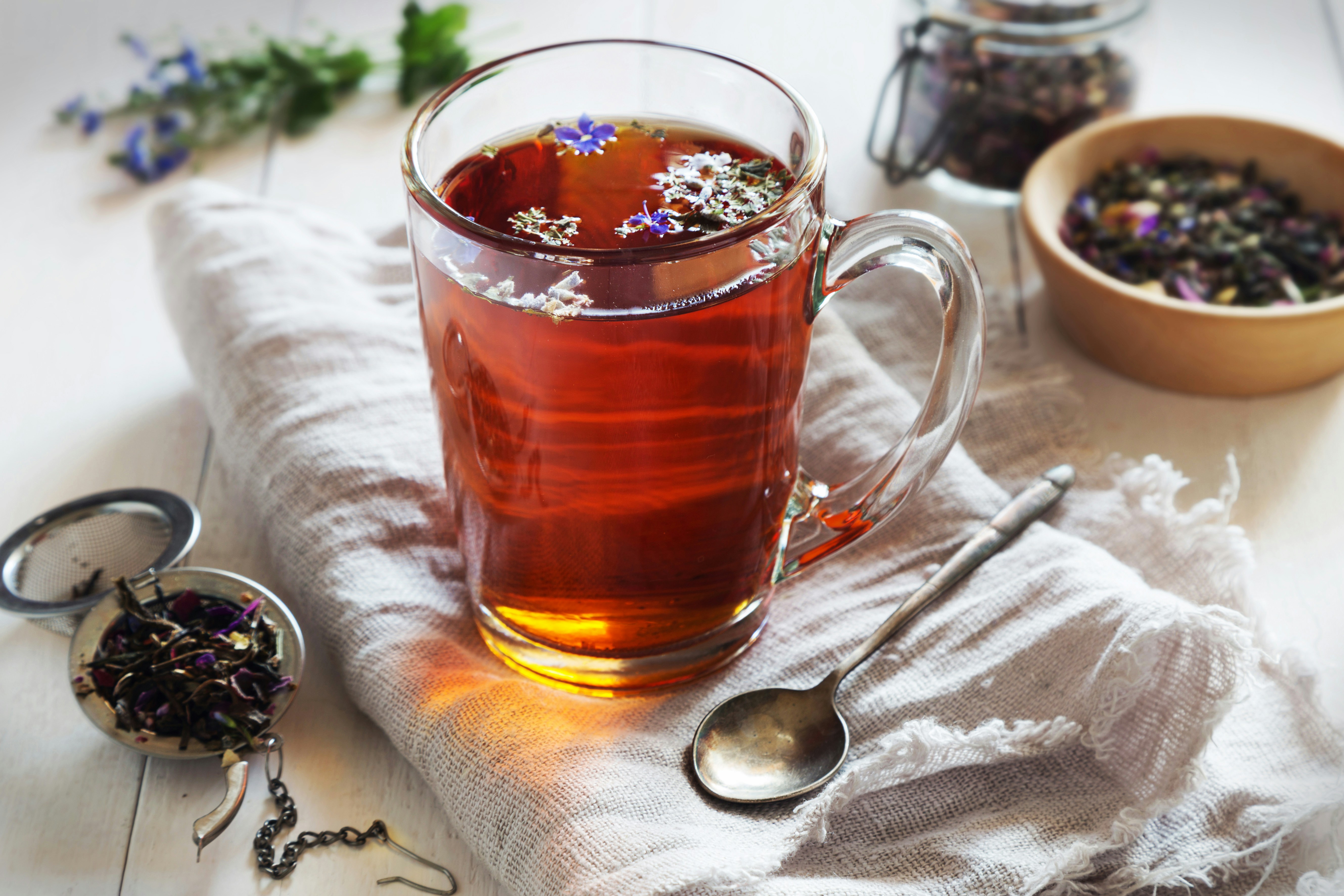
- Serve: Pour the tea into mugs. It is naturally very sweet, so no added sugar is necessary. You can eat the rehydrated fruits at the bottom of the cup!
Serving notes
Keep it simple
- This tea is deeply nourishing, sweet, and energetically 'warm' — an excellent evening drink for those feeling depleted, anxious, or struggling with poor sleep.
- No added sugar is necessary because the longan and red dates provide abundant natural sweetness.
- The rehydrated fruits at the bottom of the cup are edible and delicious — don't throw them away!
Caution
Read this recipe in context
- This tea is deeply nourishing, sweet, and energetically 'warm.' However, because it is very sweet and warming, traditional practice advises consuming it in moderation if you have signs of excess 'Heat' (such as a red face, severe thirst, or mouth sores) or if you are experiencing a heavy, damp, phlegmy cough, as the rich sweetness can sometimes exacerbate dampness.
Ingredient links
Related herb pages for this recipe
These kitchen pages perform best when they connect directly to ingredient profiles so
readers can check traditional terms, food uses, and caution notes in one place.
References
References
[1] Healthline. Jujube Fruit: Nutrition, Benefits, and Uses. https://www.healthline.com/nutrition/jujube
[2] PubMed. Dimocarpus longan (Longan): phytochemistry and biological activities. https://pubmed.ncbi.nlm.nih.gov/25829822/
[3] NCCIH. Jujube. https://www.nccih.nih.gov/health/jujube
Keep exploring
Back to Kitchen Traditions
This article is part of the Kitchen Traditions section. Return
there for more kitchen-focused reading and ingredient ideas.